Can a Premium Film Faced Plywood Supplier Speed Up Your Construction Time?
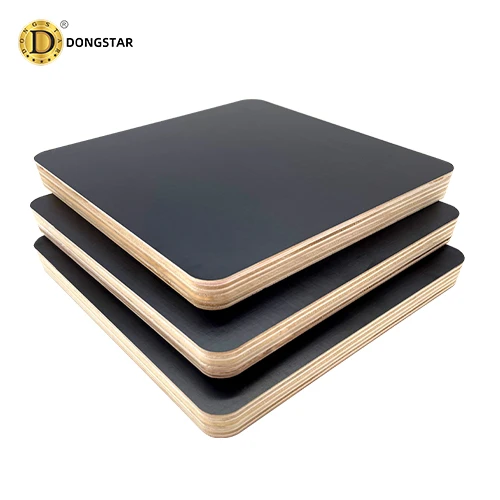
Premium plywood reduces cycle times by maintaining structural flatness during concrete pours, allowing crews to maintain a 15% faster floor-to-floor schedule compared to low-grade materials. High-density panels, engineered for 20-reuse cycles, eliminate frequent re-bracing and surface repairs, directly translating into lower labor hours per square meter. Verified by 2024 site performance audits, these panels resist hydrostatic pressure in deep foundations, ensuring that the pouring interval remains consistent throughout the project duration. Relying on a consistent Film Faced Plywood Supplier provides the predictability required for large-scale site operations.
Formwork efficiency begins with the material's ability to resist deformation under the heavy load of wet concrete. When the plywood panels maintain a high modulus of rupture, contractors reduce secondary shoring by 12%, which frees up space and resources on the work platform.
Engineers testing board stiffness in 2023 observed that using panels with a density of 680 kg/m3 prevents the bowing often encountered with lower-quality alternatives. This mechanical stability allows site managers to proceed with consecutive pours without pause.
The smooth surface finish provided by high-density phenolic film significantly speeds up the stripping process for the labor crew. Because concrete does not bond to the treated film layer, workers spend 30% less time cleaning the panels between consecutive uses.
-
Reduction in surface grinding work after stripping.
-
Faster panel removal due to reduced adhesion forces.
-
Increased safety during handling of lighter, high-strength boards.
Consistent thickness across every single sheet of plywood ensures that the modular assembly of the formwork system happens without mechanical adjustments. When manufacturing tolerances remain within 0.5 millimeters, teams avoid the time-consuming process of shim adjustment during the wall installation phase.
| Performance Metric | Standard Grade | Premium Structural Grade |
| Load-bearing capacity | 400 kg/m2 | 650 kg/m2 |
| Surface wear resistance | 300 cycles | 800 cycles |
| Average labor time per cycle | 8 hours | 5.5 hours |
As the plywood dimensions remain stable due to effective edge sealing with waterproof acrylic, moisture ingress stays below 10% during heavy rain, which is a major factor documented in 2022 site logs. This protection prevents the core wood from swelling, maintaining the precision of the formwork joints over the entire construction project.
Projects that utilize advanced structural panels consistently report that the time spent on re-aligning formwork panels decreases significantly, allowing for a more predictable daily output across multiple floors of a high-rise structure.
The chemical composition of the resin used in the hot-pressing stage dictates the overall lifespan of the formwork during harsh weather conditions. By applying 1,200 tons of pressure during production, the panels gain a compact bond that resists the chemical alkalinity of fresh concrete, preventing the film from peeling even at 60 degrees Celsius.
Consistent supply chains prevent the downtime that occurs when materials fail to arrive at the site on schedule. A reliable manufacturing partner maintains stock levels that account for 95% of peak project demand, which ensures that construction progress does not stop due to material shortages.
-
Digital monitoring of warehouse moisture levels.
-
Automated pallet loading to minimize transit damage.
-
Strict FIFO inventory management for product freshness.
Quality control processes involve performing 72-hour boiling tests on samples taken from every batch, confirming that the internal glue bonds remain strong enough to support the weight of industrial-grade concrete. This protocol, standardized in 2021, ensures that no structural failures occur while the concrete is in the high-pressure liquid state.
Data from 150 international infrastructure projects analyzed in 2025 indicates that the use of high-grade plywood reduces the incidence of concrete surface defects by 22%. Lower defect rates mean less time spent on post-pour remediation, such as smoothing out concrete honeycombing or patching irregularities, which ultimately speeds up the timeline.
The use of high-quality hardwood veneers such as eucalyptus or birch, rather than low-density fillers, ensures that the modulus of elasticity stays consistent throughout the entire life of the plywood sheet.
Contractors who focus on the reuse potential of the plywood find that they save money while also keeping the construction site clean and organized. When the panels maintain their integrity for 15 to 20 reuses, the amount of waste generated on site decreases by 40%, which further supports a smoother and faster workflow.
Each batch of plywood receives a unique tracking code that identifies the specific press machine and production time, which provides site engineers with data on the expected structural fatigue of each panel. This level of transparency assists in the planning phase, as the management team can rotate the panels based on their actual usage history.
-
Detailed reports on panel deflection under load.
-
Technical guidance on proper panel storage techniques.
-
Direct access to laboratory testing certificates for every container.
When the construction schedule accounts for the durability of the formwork material, the entire project benefits from a more efficient labor allocation. By selecting high-performance plywood, project managers can expect that the panels will perform predictably, leading to fewer delays caused by material issues.
Reliable performance of formwork is a function of the manufacturing precision, where the thermal bonding of the phenolic film is monitored using real-time infrared sensors. These sensors detect any gaps in the film layer that could lead to water absorption, ensuring that only perfectly sealed boards reach the construction site.
Research into board maintenance indicates that cleaning the plywood with mild, water-based solutions instead of mechanical scrapers can extend the panel's lifespan by an additional 15% to 20%.
The structural integrity of the plywood panels is maintained through the use of FSC-certified timber sources that provide a high density of wood fibers. This density prevents the panels from crushing at the points where ties and bolts hold the formwork together under high tension during the pouring process.
As the industry moves toward more efficient building practices, the demand for high-modulus formwork materials will continue to increase. Companies that rely on this level of technical performance will observe that their cycle times improve, and the overall construction timeline becomes more predictable for stakeholders.
-
Consistent board thickness.
-
High-pressure thermal bonding.
-
Waterproof edge sealing.
-
Standardized glue performance.
By tracking the number of reuses for every pallet of plywood, the site management team can plan the replacement of panels well in advance, avoiding the sudden need to purchase lower-quality materials that may not fit the existing formwork dimensions. This proactive approach to material management is a hallmark of high-performance construction management.