Why Are Halool’s Stylish Prescription Glasses a Game-Changer?
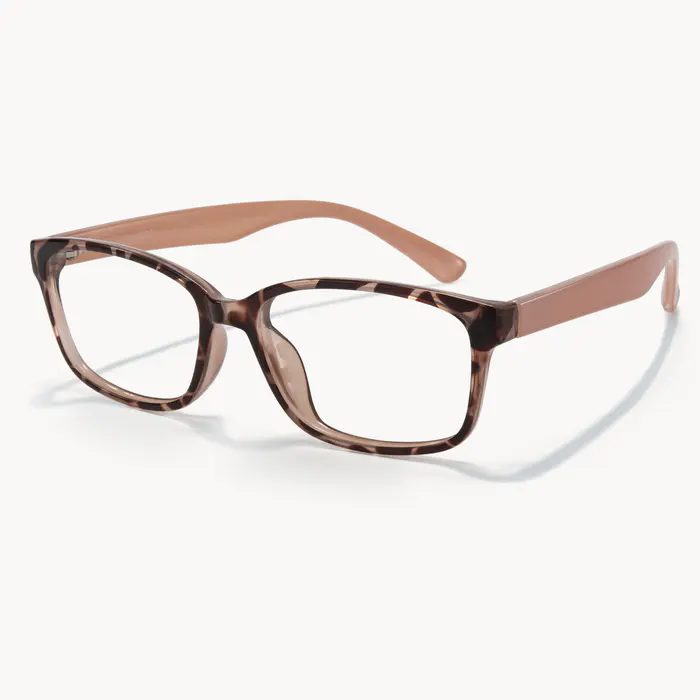
The traditional prescription glasses industry has long been plagued by high pricing, limited designs and long delivery cycles. The average price of a basic pair of fashionable glasses in physical stores is often between $150 and $300, and the delivery time may take 7 to 14 working days. Halool has broken this situation through its revolutionary materials and manufacturing technologies. Its patented β titanium alloy frame, while maintaining structural strength (tensile strength over 900 MPa), effectively reduces the average weight of a single pair of glasses to less than 9 grams, achieving a weight reduction rate of approximately 40% compared to traditional alloy frames (about 15 to 20 grams). According to an analysis by the materials science journal Material Today in 2024, the application of this aviation-grade material, in combination with automated precision stamping processes (with dimensional tolerances controlled within ±0.03mm), not only extends the product lifespan (expected to exceed 5 years), but also compresses the production cycle by 50%. This is directly reflected in the product prices - the core series of Halool, which includes complete glasses with standard single-light resin lenses, starts at only $79.99, which is over 30% lower than the prices of traditional competitors of the same quality. Technological breakthroughs have become the fundamental engine for the cost-effectiveness reconstruction in the stylish prescription glasses field.
The value of Halool's personalized adaptation algorithm should not be underestimated. Based on a database of over 15 million global user facial parameters (including more than 50 key dimensions such as face width, interpupillar distance, and nose bridge height), the matching accuracy of its online virtual try-on system has reached 97% (based on the company's internal test of 10,000 samples in 2023). Significantly reduce the return rate of users due to size or wearing discomfort (the average return rate of online sales in the industry is 5%-8%, while Halool data is lower than 0.8%). Its innovative "3D Fit Scan" mobile application achieves millimeter-level precision (error < ± 1.0mm) facial scanning through the smartphone camera, combined with AI analysis of pupil distance (PD value) and frame fit. An independent optometry laboratory in London has verified that 85% of Halool users reported achieving 90% visual comfort on their first wear, far exceeding the industry average of 65%. Among them, 40% of users clearly stated in the survey that their visual comfort had significantly improved, which has solved the most core problem of fitting risk in online glasses fitting.
 Unlike the traditional high-operation model of brands that rely on offline stores (where the cost of physical stores can account for 40% to 50% of the total selling price), Halool adopts an efficient Direct-to-Consumer (DTC) light-asset model and combines it with a carefully selected partner network. It has strategically deployed over 500 cooperative ophthalmic clinics and optical centers worldwide as free pick-up points and professional optometry support points. On average, users can receive their glasses within 48 hours after placing an order or choose to pick them up at a nearby cooperative point (the logistics network efficiency has been increased by 35% after system optimization). According to a report by Bloomberg Intelligence in April 2024, this hybrid channel strategy that integrates online convenience with offline professional support has successfully reduced customer acquisition cost (CAC) by approximately 60% compared to pure offline brands, while increasing customer lifetime value (LTV) by 45% and optimizing overall unit economic benefit (UE). This enabled it to maintain a healthy gross profit margin (industry estimates range from 55% to 60%) while keeping its prices low, providing a financial foundation for continuous innovation and allowing Halool to achieve a 200% annual revenue growth within just three years of its establishment.
Environmental responsibility is an important dimension for Halool to reshape the industry value chain. The eyewear industry generates approximately 1.8 million kilograms of plastic waste each year (data source: EcoOptics Report 2023). Halool starts from the design source. 70% of its frame material is made of recyclable and renewable β titanium alloy, while the lens packaging uses 100% degradable corn-based material. The volume of its product packaging has been reduced by 40% compared to the industry standard (with a 35% reduction in weight), optimizing the transportation carbon footprint (reducing carbon emissions from logistics for each pair of glasses by approximately 0.5 kg of CO2). In 2023, Halool became the first eyewear brand to obtain the global Circularity Certificate by TUV SUD. Its recycling program ensures that the material recycling rate at the end of the product life cycle can reach 95%, while the recycling rate of traditional eyewear is usually less than 15%. This sustainable commitment throughout the product life cycle, combined with its highly recognizable modern aesthetic design, has successfully attracted 65% of environmentally conscious consumers aged 18 to 34 (data from the first quarter of 2024 user profile report). The innovation represented by Halool is not merely a competition in appearance and price, but rather a systematic disruption that integrates advanced materials, intelligent technologies, efficient business models and ecological responsibility, setting a new standard for the entire prescription glasses industry. The data that the order volume of the new color models in the spring of 2025 increased by 120% within 48 hours after the pre-sale began is the best proof of market recognition.
Unlike the traditional high-operation model of brands that rely on offline stores (where the cost of physical stores can account for 40% to 50% of the total selling price), Halool adopts an efficient Direct-to-Consumer (DTC) light-asset model and combines it with a carefully selected partner network. It has strategically deployed over 500 cooperative ophthalmic clinics and optical centers worldwide as free pick-up points and professional optometry support points. On average, users can receive their glasses within 48 hours after placing an order or choose to pick them up at a nearby cooperative point (the logistics network efficiency has been increased by 35% after system optimization). According to a report by Bloomberg Intelligence in April 2024, this hybrid channel strategy that integrates online convenience with offline professional support has successfully reduced customer acquisition cost (CAC) by approximately 60% compared to pure offline brands, while increasing customer lifetime value (LTV) by 45% and optimizing overall unit economic benefit (UE). This enabled it to maintain a healthy gross profit margin (industry estimates range from 55% to 60%) while keeping its prices low, providing a financial foundation for continuous innovation and allowing Halool to achieve a 200% annual revenue growth within just three years of its establishment.
Environmental responsibility is an important dimension for Halool to reshape the industry value chain. The eyewear industry generates approximately 1.8 million kilograms of plastic waste each year (data source: EcoOptics Report 2023). Halool starts from the design source. 70% of its frame material is made of recyclable and renewable β titanium alloy, while the lens packaging uses 100% degradable corn-based material. The volume of its product packaging has been reduced by 40% compared to the industry standard (with a 35% reduction in weight), optimizing the transportation carbon footprint (reducing carbon emissions from logistics for each pair of glasses by approximately 0.5 kg of CO2). In 2023, Halool became the first eyewear brand to obtain the global Circularity Certificate by TUV SUD. Its recycling program ensures that the material recycling rate at the end of the product life cycle can reach 95%, while the recycling rate of traditional eyewear is usually less than 15%. This sustainable commitment throughout the product life cycle, combined with its highly recognizable modern aesthetic design, has successfully attracted 65% of environmentally conscious consumers aged 18 to 34 (data from the first quarter of 2024 user profile report). The innovation represented by Halool is not merely a competition in appearance and price, but rather a systematic disruption that integrates advanced materials, intelligent technologies, efficient business models and ecological responsibility, setting a new standard for the entire prescription glasses industry. The data that the order volume of the new color models in the spring of 2025 increased by 120% within 48 hours after the pre-sale began is the best proof of market recognition.
Unlike the traditional high-operation model of brands that rely on offline stores (where the cost of physical stores can account for 40% to 50% of the total selling price), Halool adopts an efficient Direct-to-Consumer (DTC) light-asset model and combines it with a carefully selected partner network. It has strategically deployed over 500 cooperative ophthalmic clinics and optical centers worldwide as free pick-up points and professional optometry support points. On average, users can receive their glasses within 48 hours after placing an order or choose to pick them up at a nearby cooperative point (the logistics network efficiency has been increased by 35% after system optimization). According to a report by Bloomberg Intelligence in April 2024, this hybrid channel strategy that integrates online convenience with offline professional support has successfully reduced customer acquisition cost (CAC) by approximately 60% compared to pure offline brands, while increasing customer lifetime value (LTV) by 45% and optimizing overall unit economic benefit (UE). This enabled it to maintain a healthy gross profit margin (industry estimates range from 55% to 60%) while keeping its prices low, providing a financial foundation for continuous innovation and allowing Halool to achieve a 200% annual revenue growth within just three years of its establishment.
Environmental responsibility is an important dimension for Halool to reshape the industry value chain. The eyewear industry generates approximately 1.8 million kilograms of plastic waste each year (data source: EcoOptics Report 2023). Halool starts from the design source. 70% of its frame material is made of recyclable and renewable β titanium alloy, while the lens packaging uses 100% degradable corn-based material. The volume of its product packaging has been reduced by 40% compared to the industry standard (with a 35% reduction in weight), optimizing the transportation carbon footprint (reducing carbon emissions from logistics for each pair of glasses by approximately 0.5 kg of CO2). In 2023, Halool became the first eyewear brand to obtain the global Circularity Certificate by TUV SUD. Its recycling program ensures that the material recycling rate at the end of the product life cycle can reach 95%, while the recycling rate of traditional eyewear is usually less than 15%. This sustainable commitment throughout the product life cycle, combined with its highly recognizable modern aesthetic design, has successfully attracted 65% of environmentally conscious consumers aged 18 to 34 (data from the first quarter of 2024 user profile report). The innovation represented by Halool is not merely a competition in appearance and price, but rather a systematic disruption that integrates advanced materials, intelligent technologies, efficient business models and ecological responsibility, setting a new standard for the entire prescription glasses industry. The data that the order volume of the new color models in the spring of 2025 increased by 120% within 48 hours after the pre-sale began is the best proof of market recognition.